Release time:2026.09.07 | view count:245
September 4, 2026 – Lumileds, a global leader in advanced LED and automotive lighting solutions, announced a major expansion of its manufacturing operations in Penang, Malaysia, to accelerate production of advanced automotive lighting products.
Penang facility positioned as global manufacturing hub
Steve Barlow, CEO of Lumileds, said: "The Lumileds Penang facility is the true centerpiece of our manufacturing operations and a key hub of top talent for our shared services and multi-functional center of excellence. We continue to view Penang, Malaysia as a strategic location for investment and growth, directly supporting our global business expansion plans."
Lumileds' roots in Penang date back decades, tracing to the optoelectronics division of Hewlett-Packard. In 1968, HP pioneered the commercialization of LEDs. In 1999, HP spun off its optoelectronics and other businesses to form Agilent Technologies, and that same year Agilent and Philips jointly established Lumileds. In 2006, Philips acquired full ownership of Lumileds. Today, the facility has become the foundation and core of Lumileds' global production network.
Expansion focuses on headlamp integrated solutions and signal lighting
The expansion includes establishing two high-volume production lines for LUXEON Go at one of its two Penang manufacturing plants. LUXEON Go is the world's first integrated solution designed for automotive headlamps (including Adaptive Driving Beam, ADB) and advanced lighting components, featuring simplified optical, mechanical, and electrical interfaces. In addition, LUXEON LxN integrated LED vehicle signaling solutions have commenced production at the Penang site.
Lumileds is also transferring its market-leading Thin-Film Flip-Chip (TFFC) process technology to Penang. Lumileds stated that the expansion enables it to leverage its existing, most cost-effective manufacturing capabilities to accelerate delivery of these new integrated solutions.
Notably, TFFC technology addresses the core pain points of traditional LEDs in brightness, thermal management, and reliability, making it a key technology driving demanding markets such as automotive lighting. It was developed at Lumileds' advanced laboratory in San Jose, California. In March of this year, Lumileds notified California officials of its plan to close its San Jose facility.
Multiple ownership changes and terminated acquisition
In 2017, US private equity firm Apollo Global Management acquired an 80.1% stake in Lumileds for approximately US$2 billion. In 2018, a large-scale debt-financed special dividend by Lumileds significantly increased the company's liabilities. Compounded by global supply chain constraints and ongoing challenges from the Russia-Ukraine conflict, the company's leverage had reached 18.1x debt/EBITDA as of March 31, 2022, ultimately leading to a bankruptcy reorganization filing in the US in August of that year. Through the reorganization, financed debt was reduced from approximately US$1.7 billion to US$400 million, and the company completed its restructuring and emerged from bankruptcy protection that October.
In August 2025, Chinese LED chip manufacturer Sanan Optoelectronics, together with Malaysian semiconductor company Inari Amertron, announced the acquisition of 100% of Lumileds Holding B.V. for US$239 million in cash. The transaction was submitted for regulatory approval in multiple countries. On April 17, 2026, Sanan Optoelectronics announced that the acquisition had been formally terminated, as the Committee on Foreign Investment in the United States (CFIUS) determined the transaction would raise unresolvable US national security risks and required the parties to withdraw their filings and abandon the deal.
This marks the second time an acquisition of Lumileds has failed due to CFIUS review. In 2015, Philips planned to sell an 80.1% stake in Lumileds to a Chinese investment consortium led by GSR Ventures, a deal that likewise fell through due to CFIUS intervention.
Market demand drives capacity expansion
According to industry data, the global automotive LED lighting market is expected to grow from US$21.04 billion in 2025 to US$22.46 billion in 2026, representing a compound annual growth rate (CAGR) of 6.7%. According to TrendForce forecasts, vehicles equipped with adaptive headlamps will reach 22.8 million units in 2030, a penetration rate of 23.8%. Against this backdrop, capacity expansion has become a natural choice to align with growing market demand.
industry trends | 2026.10.14
industry trends | 2026.09.21
industry trends | 2026.09.11
industry trends | 2026.09.10
industry trends | 2026.09.09


全球照明与建筑电气领域的顶级盛会——2026年法兰克福国际灯光照明及建筑技术与设备展览会(Light + Buildin…
2026.03.09
全球照明与建筑电气领域的顶级盛会——2026年法兰克福国际灯光照明及建筑技术与设备展览会(Light + Buildin…
2026.03.09
2026年1月12日,第19届中东(迪拜)国际照明及智能建筑展览会(Light + Intelligent Building Middle East 2…
2026.01.03
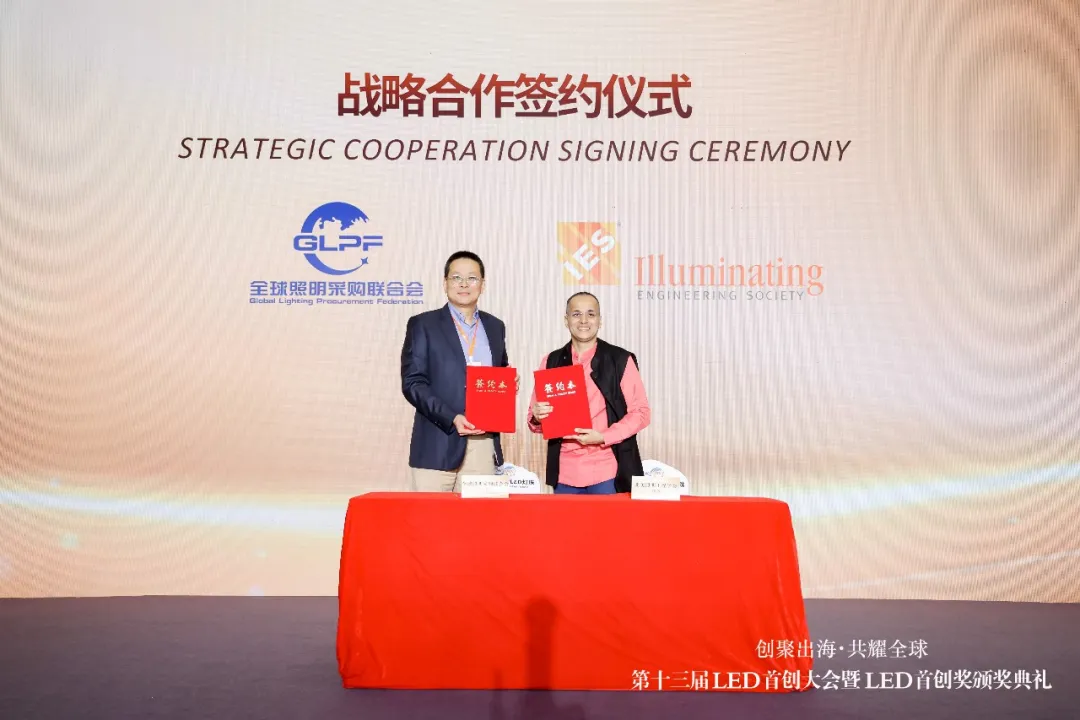
广州,2026年6月11日——在第十三届LED首创大会现场,全球照明采购联合会(GLPF)与北美照明工程学会(IES)…
2026.06.18
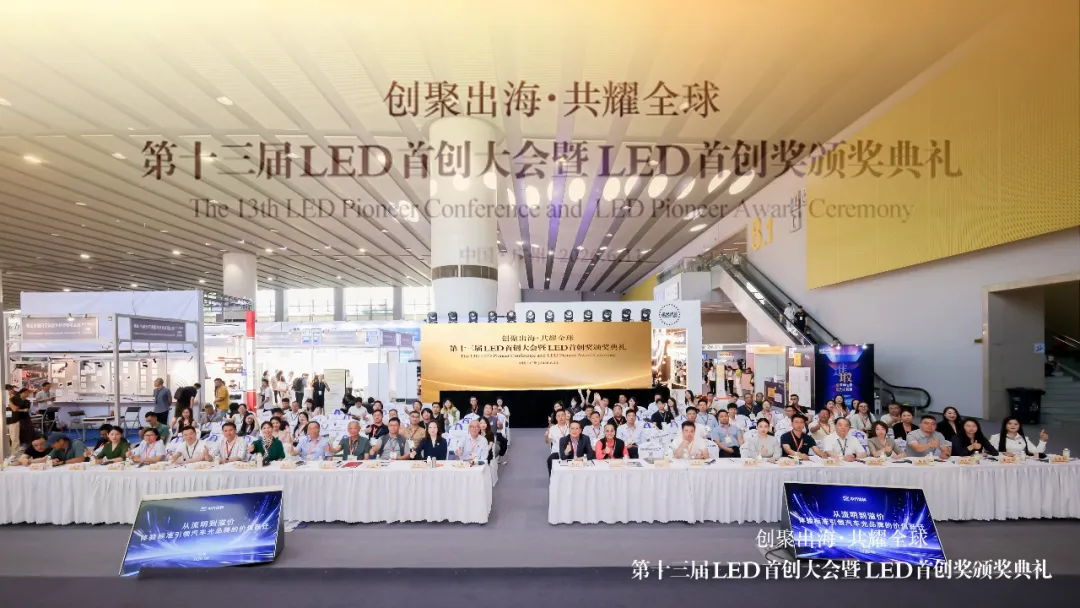
广州,2026年6月11日 — 六月的羊城,光潮涌动。以“创聚出海·共耀全球”为主题的第十三届LED首创大会暨LED…
2026.06.18

在逆全球化浪潮与地缘政治交织的当下,中美照明行业的技术互通、市场协同正面临挑战——如何打破壁垒、激活产…
2025.09.09
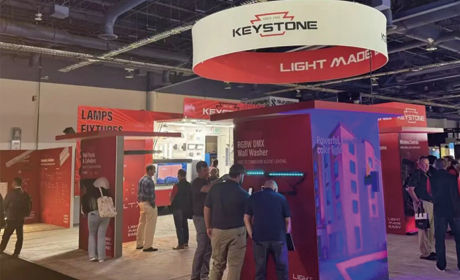
拉斯维加斯,2025年5月7日—— 正在美国拉斯维加斯会展中心举办的2025年美国国际照明展(LightFair)上,全球…
2025.05.08
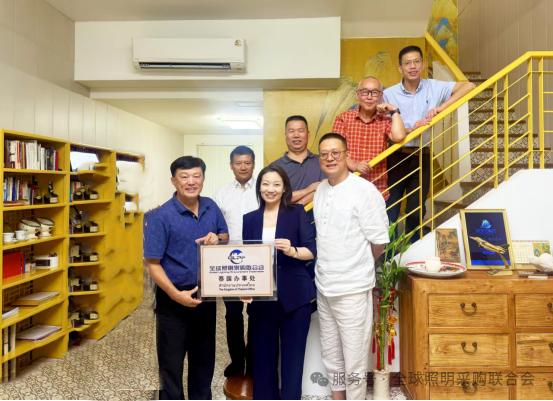
为响应东南亚照明市场蓬勃发展的机遇,解决中企出海痛点,助力全球照明产业链高效协同,2025年6月24日,全球…
2025.06.25
Shenzhen Office: 907, Building C, Qianhai Excellence Times Square, Bao'an District, Shenzhen
Email:glpf2025@yeah.net

Follow GLPF


Copyright © 2026 Global Lighting Procurement Federation (GLPF) All rights reserved