Release time:2026.10.14 | view count:72
Where do the cost increases come from? Let us break down the accounts.
The revised EU Energy Performance of Buildings Directive (EPBD) entered full enforcement in May 2026. All newly constructed commercial buildings in the EU are mandated to install automatic lighting control systems and building automation systems. To meet the EU’s new regulations, the industry widely adopts the D4i solution for drivers. Such solutions must support basic DALI dimming alongside energy consumption metering and fault diagnosis capabilities complying with DALI Part 250–253 standards. Meanwhile, to satisfy maintainability and thermal management requirements, specifications for some projects require drivers to be mounted separately with pluggable terminal blocks, without sharing heat dissipation paths with LED modules.
Compared with the bulk procurement cost of conventional constant-current drivers, D4i-certified drivers bring substantial cost increases. Bulk prices for ordinary constant-current drivers range from single digits to more than ten RMB, varying by power rating and application scenario. In contrast, publicly quoted D4i-certified drivers from Moons’ Electric start at RMB 385 per unit. LED drivers normally account for 20%–30% of the total bill-of-materials cost for LED panel lights, and this proportion rises further once D4i solutions are deployed.
The Carbon Border Adjustment Mechanism (CBAM), commonly known as the EU carbon tariff, is designed to narrow the carbon cost gap between high-carbon domestic EU industries and imported goods. Initially, it covers six product categories: iron and steel, aluminium, cement, fertilisers, electricity and hydrogen. It requires EU importers of covered high-carbon imports to purchase CBAM certificates corresponding to the embedded carbon emissions of products. While EU importers bear the legal obligations under CBAM, carbon data is mostly sourced from Chinese manufacturers. Cost and data pressure are therefore passed down the supply chain to Chinese exporters.
CBAM officially took effect on 1 January 2026. Finished LED luminaires are not yet directly listed as covered goods. However, aluminium structural components within lighting fixtures fall under downstream applications of aluminium, a CBAM precursor material. The EU has proposed extending CBAM coverage to around 180 steel and aluminium-intensive downstream products, which is expected to roll out around 2028. Core components of lighting equipment may then be directly included.
Ge Qing, Deputy Director of the Green Product Evaluation Center at the China Nonferrous Metals Industry Association, stated in an open industry forum that the direct emission average of China’s electrolytic aluminium stands at approximately 1.57 tCO₂e per tonne of aluminium. Under the factor database of the Ministry of Ecology and Environment, the average emission for unwrought aluminium in China is about 1.6879 tCO₂e per tonne. By contrast, the CBAM default emission value set by the EU for Chinese aluminium products is 3.30 tCO₂e per tonne (including a 10% surcharge for 2026), significantly higher than China’s actual emission levels.
Actual emission data must be verified by EU-accredited independent verifiers. Without verified measured data, EU importers have to file declarations using default values. A simplified industry calculation shows that using default values instead of verified actual emissions may add roughly EUR 145 in carbon costs per tonne of aluminium. Take a panel light with an aluminium frame weighing 0.8 kg as an example. Calculated using the default value of 3.30 tCO₂e/tonne aluminium, its embedded carbon emission is about 2.64 kg CO₂e. Based on the 2026 CBAM certificate price of approximately EUR 75 per tonne CO₂e (CBAM certificate prices fluctuate quarterly), the theoretical carbon cost per unit is around EUR 0.20. While the per-unit cost looks modest, annual exports of 100,000 units translate to potential passed-through costs of nearly EUR 20,000. Moreover, carbon prices already paid domestically cannot be simply offset; the EU only recognises carbon prices actually paid during production.
Notably, default values for aluminium and complex precursor goods without verified actual emission data will incur incremental surcharges year on year: 10% in 2026, 20% in 2027, and 30% starting from 2028 (fertilisers only carry a 1% surcharge and electricity is exempt from this rule). This means carbon costs for aluminium parts declared with default values will keep rising annually.
The 2026 half-year financial report of Yankon Lighting serves as a typical case. The company posted operating revenue of CNY 1.304 billion, down merely 1.67% year-on-year. Yet its net profit attributable to parent company shareholders reached CNY 49 million, plummeting 48.84% year-on-year. The half-year report explicitly attributes the sharp profit drop to exchange rate volatility. Exchange gains and losses reversed from a gain of CNY 21.3825 million in the same period last year to a loss of CNY 21.6183 million. The swing alone impacted profits by about CNY 43 million, directly eroding profit margins from export business.
What does CNY 43 million represent? If we assume a net profit of CNY 5 per panel light, this amount equals the book profit of roughly 8.6 million lamps wiped out by exchange rate movements. It is not a loss of order volume; rather, the earnings from the same batch of orders are eroded by periodic RMB appreciation against the US dollar.
Leading enterprises have taken proactive measures. Topstar Lighting proposed foreign exchange derivative transactions for 2026 with a ceiling of USD 500 million, covering forward foreign exchange settlement and sales, swaps and options. Foshan Lighting also announced foreign exchange hedging transactions up to USD 220 million in 2026. Its rationale is that export business is settled in US dollars. The time lag between quotation, order signing and payment collection exposes earnings to material exchange rate fluctuations.
For lighting exporters whose overseas revenue accounts for roughly 70% of total income, exchange rates are more than just market volatility — they constitute a structural variable on the profit statement. Large players deploy hedging tools, while many small and medium-sized lighting exporters still bear settlement exchange rate risks passively. The gap between the two groups represents hidden costs.
EU compliance is merely the baseline threshold. What truly eats into corporate profits is fragmented certification requirements across emerging markets.
The Bureau of Indian Standards issued revised implementation guidelines for LED luminaire standards in March 2026. The new standard entered mandatory force on 2 August 2026, superseding the old version on the same date. Enterprises failing to complete standard migration will have their existing BIS registrations invalidated. Starting 1 October 2026, Saudi Arabia requires third-party photobiological safety reports for commercial LED products upon customs clearance, with blue light hazard classification incorporated as a core test item under SASO CoC. Peru plans to add energy labelling controls for 11 product categories; LED drivers with output power exceeding 80W must meet a minimum energy efficiency threshold of 87%. Indonesia uses 10-digit HS codes for customs declaration, requiring enterprises to reference Indonesia’s local tariff schedule instead of China’s 8-digit codes.
Quotations from certification bodies show CE ErP testing for one LED luminaire model costs CNY 1,500–3,000, plus CNY 1,000–2,000 per model for EPREL energy label registration. A full first-year ETL certification for one model in the US ranges from CNY 30,000 to 60,000. For 20 models exported to five global markets, estimated at a starting certification cost of CNY 5,000 per model per market, total certification expenses can easily exceed CNY 500,000. These figures reflect standard quotes from certification bodies and serve as industry benchmarks.
Hidden risks also exist in customs declaration. Mis-declaration of tariff codes and incorrect HS code classification are common issues among lighting exporters. Penalties range from fines to revocation of export tax rebate eligibility. Certification and customs filing are not one-off investments; enterprises incur recurring compliance fees for every model, every market and every standard update.
Returning to the panel light cited at the beginning. At the FOB price of USD 12 in late 2023, its cost structure was roughly: materials USD 5, labour USD 1.5, manufacturing overhead USD 1.5, certification and logistics USD 2, profit USD 2.
By 2026, material costs fell to USD 4.5 due to lower aluminium prices and cheaper electronic components. Nevertheless, incremental costs from switching to D4i drivers, CBAM carbon costs of approximately EUR 0.20 (equivalent to USD 0.22), higher allocated certification expenses and exchange rate losses of around USD 0.3 pushed total costs from USD 9 to roughly USD 10. The FOB price had to be cut to about USD 10.5. Profit margins have been systematically compressed.
This is the real picture behind “selling hard for thin returns”. It does not mean outright losses, but profit margins are so wafer-thin that they cannot withstand any minor fluctuation.
Lighting exporters are not facing a grand strategic challenge, but cost restructuring order by order. Orders keep coming and lamps keep shipping, yet profit figures on balance sheets keep shrinking. Compliance mandates keep tightening, and all hidden costs keep accumulating. Even with squeezed margins, orders will not disappear. Instead, they will flow from open competition to the most reliable and capable manufacturers.
industry trends | 2026.10.14
industry trends | 2026.09.21
industry trends | 2026.09.11
industry trends | 2026.09.10
industry trends | 2026.09.09


全球照明与建筑电气领域的顶级盛会——2026年法兰克福国际灯光照明及建筑技术与设备展览会(Light + Buildin…
2026.03.09
全球照明与建筑电气领域的顶级盛会——2026年法兰克福国际灯光照明及建筑技术与设备展览会(Light + Buildin…
2026.03.09
2026年1月12日,第19届中东(迪拜)国际照明及智能建筑展览会(Light + Intelligent Building Middle East 2…
2026.01.03
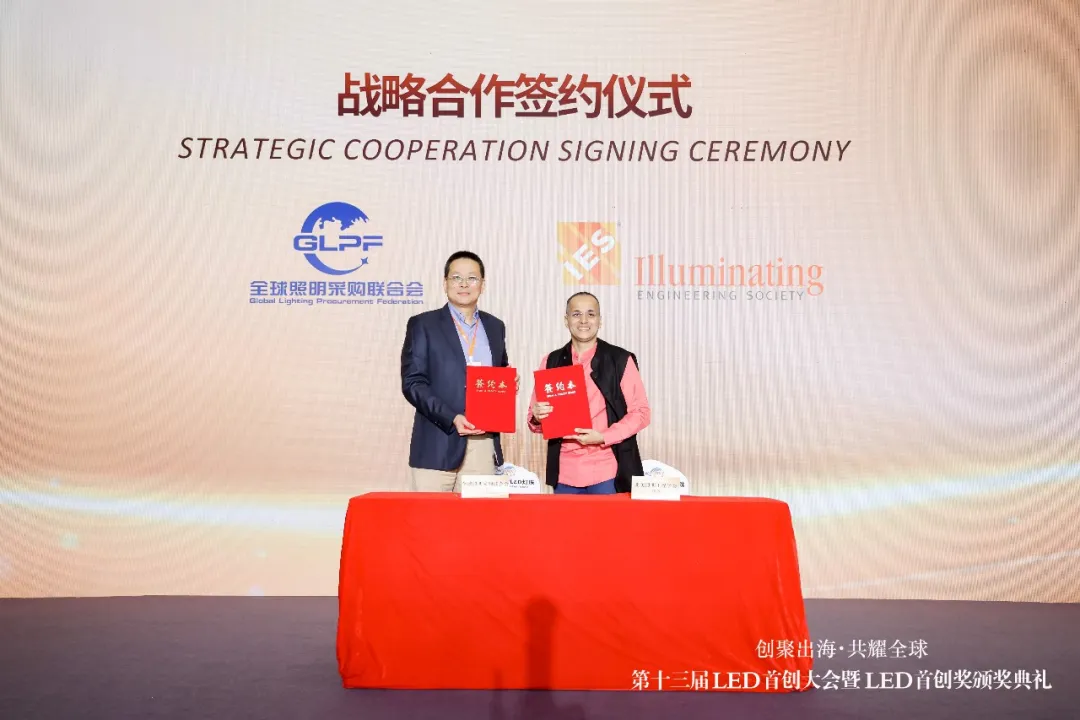
广州,2026年6月11日——在第十三届LED首创大会现场,全球照明采购联合会(GLPF)与北美照明工程学会(IES)…
2026.06.18
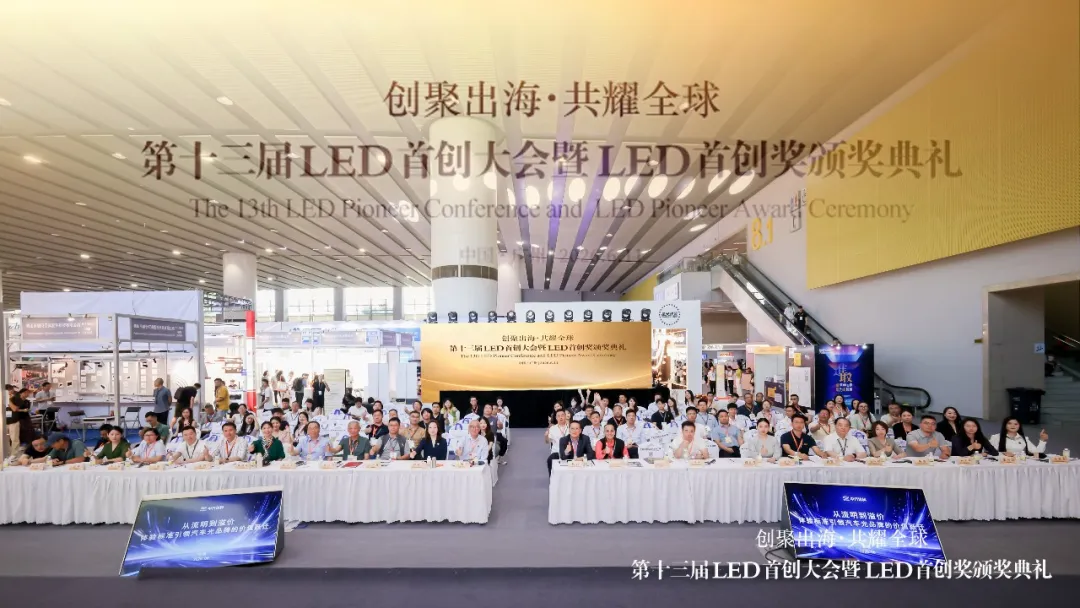
广州,2026年6月11日 — 六月的羊城,光潮涌动。以“创聚出海·共耀全球”为主题的第十三届LED首创大会暨LED…
2026.06.18

在逆全球化浪潮与地缘政治交织的当下,中美照明行业的技术互通、市场协同正面临挑战——如何打破壁垒、激活产…
2025.09.09
拉斯维加斯,2025年5月7日—— 正在美国拉斯维加斯会展中心举办的2025年美国国际照明展(LightFair)上,全球…
2025.05.08
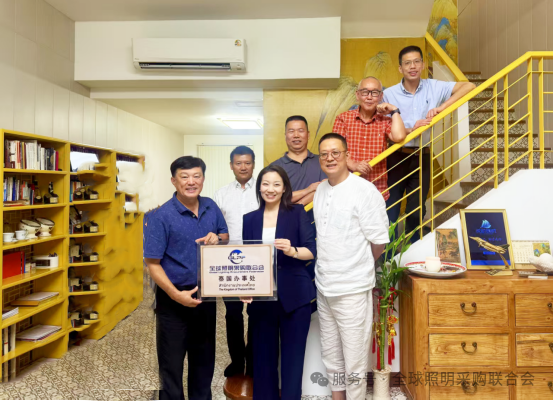
为响应东南亚照明市场蓬勃发展的机遇,解决中企出海痛点,助力全球照明产业链高效协同,2025年6月24日,全球…
2025.06.25
Shenzhen Office: 907, Building C, Qianhai Excellence Times Square, Bao'an District, Shenzhen
Email:glpf2025@yeah.net

Follow GLPF


Copyright © 2026 Global Lighting Procurement Federation (GLPF) All rights reserved