After a hiatus of several years, Signify has once again filed patent infringement lawsuits against lighting manufacturers without patent licensing, naming Canadian architectural decorative lighting supplier Artika For Living Inc. as the defendant.
On July 31, 2026, Signify North America Corporation and Signify Holding submitted a complaint to the United States District Court for the Eastern District of Texas against Quebec-based Artika, alleging infringement of six U.S. patents. This lawsuit ends Signify’s recent lull in patent litigation and sends a clear message to the global lighting industry: enforcement actions under the EnabLED licensing programme have never ceased.
Patents in Dispute: Targeting Core Technologies of Tunable White Luminaires
The six patents involved in the litigation cover key technological realms including tunable white light fixtures, LED driver circuits and modular light engine architectures. Notably, these patents do not pertain to cutting-edge sectors such as intelligent control or networking systems; instead, they protect core circuit and optical foundational technologies enabling two or three colour temperature shifts in luminaires. Over the past five years, this feature has evolved from an optional premium upgrade to a standard retail specification for decorative lighting products.
Two of the patents have a documented litigation track record:
-
U.S. Patent No. 11,408,588 (Configurable Lighting System): Signify previously asserted rights to this patent in lawsuits against ETI, Liton Lighting and Lepro.
-
U.S. Patent No. 7,737,643 (Method for Controlling LED Power Supplies): Deployed in infringement cases against EGLO and Menards, this patent was also central to a declaratory judgment action for non-infringement filed by Current Lighting against Signify.
Accused Products: Mass-Market Commodities Sold Through Retail Channels
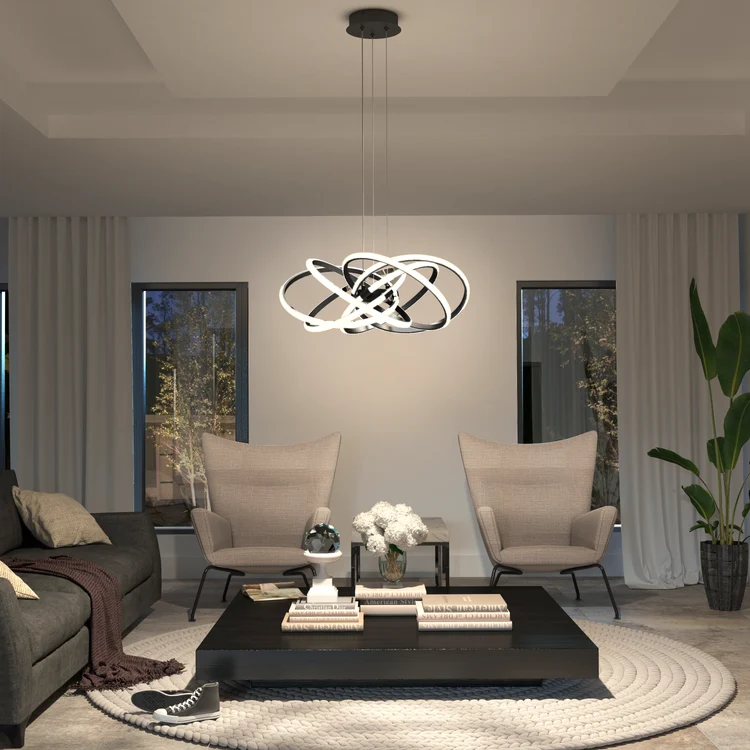
The products Artika is accused of infringing are not high-end custom luminaires, but mass-market goods widely distributed via major retail chains including The Home Depot, Lowe’s and Costco. The disputed products are all tunable white pendant lights and ceiling lamps positioned under a low-price, high-volume sales strategy with thin profit margins.
The inclusion of mass-circulation lighting goods in patent disputes signifies that patent barriers surrounding such technologies have expanded from premium product segments down to the mass consumer market.
Background: Five and a Half Years of Preceding Negotiations
This litigation did not come as a sudden surprise.
Court filings reveal that communications between Signify and Artika date back to January 2021. Over five and a half years, Signify engaged in multiple rounds of outreach: sending cease-and-desist letters, updating lists of allegedly infringing products and patents, presenting the EnabLED licensing framework, holding offline and online negotiations, and proposing multiple patent licensing cooperation plans. The complaint features more than twenty paragraphs of evidentiary records proving Artika continued selling the products despite knowing of the alleged infringement.
Choice of Jurisdiction: The Patent-Friendly Court in the Eastern District of Texas
The selection of the court holds strong tactical litigation significance.
Artika’s headquarters and distribution hubs are located in Quebec, Canada, with no physical business presence in the United States. Signify established jurisdictional nexus through its authorised Texas distributor Bell & McCoy, whose service territory covers East Texas, thereby bringing the case before the Marshall Division of the U.S. District Court for the Eastern District of Texas — widely recognised within legal circles as a forum favourable to plaintiffs in patent lawsuits.
Context: The EnabLED Licensing Programme and Sustained Patent Enforcement Campaign
The core contention of the case revolves around Signify’s EnabLED licensing programme. Launched in 2008 by Signify’s predecessor Philips Lighting, the programme originally encompassed roughly 1,000 patents. After nearly two decades of iteration, EnabLED now comprises over 650 core inventions, more than 4,600 issued patents and over 140 pending patent applications, with over 1,700 licensed partners worldwide.
This is far from Signify’s first lawsuit against enterprises outside the EnabLED licensing ecosystem. In recent years, Signify has initiated patent litigation against numerous companies:
-
Lepro: On February 10, 2026, a federal jury in the District of Nevada ruled that Lepro willfully infringed six Signify patents, ordering the defendant to pay approximately USD 410,000 in damages.
-
ETI: Signify sued ETI for infringing nine lighting patents relating to LED downlights, wall-mounted lamps and configurable lighting systems. ETI subsequently countersued Signify for patent abuse, alleging unreasonable clauses that charge licensing fees without corresponding patented technologies under the EnabLED programme.
-
Menards & Luminex: The two parties have been locked in legal battles over Signify’s Configurable Lighting System Patent No. 336. In 2025, the United States Patent Trial and Appeal Board (PTAB) invalidated 17 out of the patent’s 20 claims, before reinstating part of the claims in February 2026.
-
EGLO: The two sides eventually reached a settlement, and EGLO formally joined the EnabLED patent licensing system.
-
Nanoleaf: In April 2025, Signify filed a lawsuit against Canadian lighting brand Nanoleaf, accusing it of infringing six patents for smart lighting technologies.
-
Liton Lighting: Liton Lighting was sued by Signify for patent infringement in May 2025 and later settled the dispute.
-
Yeelight (Qingdao Yeelink Information Technology Co., Ltd.): In October 2019, Signify brought action against Xiaomi ecosystem firm Yeelight in the United States District Court for the Southern District of New York, claiming its smart LED bulbs infringed five U.S. patents. The two parties publicly announced a settlement and dismissed the case in July 2020, with Yeelight becoming an official EnabLED licensee. This case stands as a landmark example of Signify launching patent litigation against a Chinese lighting enterprise and securing substantive licensing outcomes.
Industry Implication: Litigation as a Hardball Tactic in Licensing Negotiations
The timing of this lawsuit carries special implications. Weeks before the complaint was filed, industry publication EdisonReport published an analysis questioning whether lighting manufacturers ought to revisit their EnabLED licensing agreements with Signify. The article noted that Signify had refrained from suing new market entrants for years, leading some industry insiders to speculate that the firm had shifted its strategy to prioritise negotiation over litigation.
This lawsuit thoroughly dispels such speculation. For enterprises currently evaluating renewal, renegotiation or reconsideration of their EnabLED licensing contracts, the message is unambiguous: when licensing negotiations drag on for years without resolution, litigation remains Signify’s ultimate enforcement tool.
As a Signify spokesperson commented on the case: “The six asserted patents form part of the Signify EnabLED licensing programme, which grants licences to companies implementing these patented technologies. Signify believes its patents are valid and have been infringed, and we respect the intellectual property rights of other companies.”
As tunable white light technology evolves from a premium optional feature into a standard retail configuration for luminaires, patent infringement disputes concerning this product category are poised to grow more frequent. For lighting manufacturers not enrolled in the EnabLED programme, the Artika case serves as an unmissable warning: Signify’s extensive patent portfolio is being actively enforced patent by patent to consolidate market segments it deems insufficiently licensed.