On July 23, 2026 Eastern Time, the Office of the United States Trade Representative (USTR) issued an official announcement: under Section 301 of the 1974 Trade Act, a new round of tariffs will be imposed on 60 countries and regions on the grounds of "forced labor". The new tariffs will officially come into effect at 00:01 Eastern Time on July 24th (12:01 Beijing Time on July 24th), replacing the 10% Article 122 tariff that expired on the same day.
This means that the trade game between China and the United States has added new variables. What impact will this policy adjustment have on China's lighting industry, which is highly dependent on exports? This article interprets from four dimensions: tariff replacement, key points of new policies, industry impact, and future trends.
Tariff replacement: old exits, new arrivals
This policy adjustment is not an isolated event, but a shift in the US tariff toolbox. To understand the impact of the new 301 tariffs, it is first necessary to clarify the current panorama of US tariffs on China.
(1) Expired exit: 122 customs duties
In early 2026, the United States imposed a universal tariff of 10% globally under Section 122 of the Trade Act. The background of the introduction of this tariff is quite unique - it is used to replace the IEEPA tariff (based on the International Emergency Economic Powers Act) and equivalent tariffs that were previously ruled unconstitutional by the US Supreme Court. Article 122 authorizes the President to impose temporary restrictive measures on products suspected of being detrimental to trade balance and the US dollar exchange rate, but this provision itself has a time limit.
Now, the 10% 122 tariff has expired and terminated on July 24th.
(2) Existing tariffs still in effect
After the withdrawal of the 122 tariff, the US tariff system towards China is not "zero". The following tariffs remain in effect:
(3) 301 tariff (forced labor)
It is at the node where the 122 tariff expires that the new round of 301 tariffs seamlessly connects. The new tariffs, named 'forced labor', cover 60 economies with a tax rate range of 10% -12.5%.
For China, after the 10% 122 tariff expired, a new 12.5% 301 tariff was imposed, resulting in an actual net increase of 2.5% in the overall tariff level. Although the magnitude may seem small, the comprehensive tax burden cannot be ignored after adding the previous stock 301 tariffs.
New Policy Disassembly: Four tier Taxation System
This round of 301 tariffs is not a one size fits all approach, but rather sets four levels of differentiated taxation rules based on the trade status and commitments of different economies. This design reflects the policy logic of the United States attempting to find a balance between "pressure" and "appeasement".
First layer: Additional 10% levy
Applicable objects: Economies that have established import bans on forced labor, made commitments through reciprocal trade agreements, or implemented partial restrictive measures.
Coverage: Argentina, Bangladesh, Cambodia, Canada, Ecuador, El Salvador, Guatemala, Honduras, India, Indonesia, Jordan, Malaysia, Mexico, Pakistan, Sri Lanka, Trinidad and Tobago, United Kingdom, a total of 17 economies.
These economies have achieved relatively low tax increases due to their actions in the field of labor rights.
Second layer: Fill up to 10%
Applicable to: EU and Taiwan, China.
Rule: When the most favored nation (MFN) tax rate is below 10%, an additional 301 tariff will be imposed to bring the total tax rate to 10%; If the MFN tax rate has reached 10% or more, the 301 tax rate is zero. That is, 'high or low, capped at 10%'.
Third layer: Fill up to 12.5%
Applicable objects: Japan, South Korea, Switzerland.
Rule: Same as the second layer logic, but with the cap line raised to 12.5%. These three economies are all important allies and trading partners of the United States, but have not been fully exempted.
Fourth layer: Additional levy of 12.5%
Applicable objects: Chinese Mainland, Hong Kong, Vietnam, Algeria, Angola, Australia, Bahamas, Bahrain, Brazil, Chile, Colombia, Costa Rica, Dominican Republic, Egypt, Guyana, Iraq, Israel, Kazakhstan, Kuwait, Libya, Morocco, New Zealand, Nicaragua, Nigeria, Norway, Oman, Peru, Philippines, Qatar, Russia, Saudi Arabia, Singapore, South Africa, Thailand, Türkiye, United Arab Emirates, Uruguay, Venezuela, a total of 38 economies.
China and Vietnam are included in the highest level of taxation, consistent with the long-standing pressure stance of the United States on labor rights issues between the two countries.
Key stacking rules
The new 301 tariff will be imposed in conjunction with the existing old 301 tariff in 2019, but not in conjunction with the 232 tariff. This rule directly affects the final tax burden calculation and is a key point that export enterprises need to pay close attention to.
Industry Impact: Comprehensive Tariff Calculation for Lighting Products
For Chinese lighting export enterprises, the most concerned question is: how much has the actual tax burden on exports to the United States changed after considering various tariffs?
(1) Comprehensive tariff composition
After the implementation of the new 301 tariffs, the tariff composition of Chinese lighting products exported to the United States is as follows:
Basic MFN tax rate: Typically ranging from 3.9% to 12.5% depending on different product categories
Old 301 tariff (unfair trade): 7.5% -25% (applicable to different product tiers, with exemptions for some products)
New 301 tariff (forced labor): 12.5%
After the combination of the three, the comprehensive tariff rate of Chinese lighting products exported to the United States will significantly increase.
⚠️ Important reminder: There are numerous HS codes for lighting products, and the MFN tax rates for different lamps and light sources vary. Some products on the old 301 list are exempt, with tax rates divided into multiple levels of 7.5%/10%/25%. The above tariff structure is a comprehensive framework, and the specific comprehensive tax rate varies depending on the product. Enterprises must calculate their actual tax burden based on the specific HS code of their own products, and should not make vague estimates.
(2) Differences in the impact of different product categories (based on industry experience deduction, attention should be paid to changes in prerequisite conditions)
There are differences in the impact on different lighting categories. Based on industry experience, the key premise is that major competitors in Southeast Asia are also subject to the 12.5% new 301 tariff in this round.
LED light source: relatively limited impact
The tariff difference between China and major Southeast Asian economies in the LED light source category is about 0% -4.5%. Given the above premise, a smaller tax rate difference means that Southeast Asian production capacity is difficult to form a significant price advantage.
LED lighting fixtures: significant pressure
In the LED lighting category, China is about 25% -32.2% higher than other economies. The significant tax rate difference gives Southeast Asian production capacity a certain substitution advantage in this type of product, which also explains the trend of Chinese lighting companies accelerating the layout of production capacity in Southeast Asia in recent years.
⚠️ Variable to be wary of: Southeast Asian origin verification risk. Southeast Asian countries such as Vietnam and Thailand face compliance risks in origin verification and tariff evasion. If the United States initiates a separate origin investigation or anti circumvention measures against Southeast Asia in the future, the above tax rate difference may change rapidly, and the impact assessment of the product category will need to be re evaluated. The category difference analysis in this article is only a deduction under the current situation and is not a necessary conclusion.
In addition, the tariff gap within Southeast Asian economies has also widened, which will further affect the location selection of Chinese enterprises' overseas production capacity layout.
(3) Core judgment
Overall, this round of tariff adjustments is a general levy (covering 60 economies), and the tax rates for major alternative production areas in Southeast Asia have also been raised simultaneously. Under current conditions, the overall impact on China's lighting exports is relatively limited. The existing domestic production capacity and overseas spillover capacity of Chinese enterprises can still be 'each in its own place' in the short term. However, it should be emphasized that this judgment is based on the premise that there will be no significant changes in the existing tariff structure. If variables such as origin investigation are triggered, the situation may change accordingly.
Forward looking analysis: Tariff year may continue
(1) Short term impact assessment
The core feature of this tariff adjustment is "universal collection" - no exemption for 60 economies. This universality means that Chinese lighting products are not facing discriminatory tariffs against China alone in the international market, but rather a global tariff escalation. In the case of limited changes in tariff differentials, it is highly unlikely that the global lighting trade pattern will undergo a drastic restructuring in the short term. However, this is only a scenario deduction, not a necessary conclusion - if there are targeted adjustments in subsequent policies, the pace of pattern evolution may accelerate.
(2) Mid term risk warning
However, limited short-term impact does not mean that one can rest assured. The following factors require continuous attention:
The long-term nature of the game between China and the United States: The economic and trade friction between China and the United States has the characteristics of inevitability, long-term and complexity, and tariff tools will continue to be used as a means of game.
The second '301 sword' is hanging and not yet fallen: another investigation into 'structural overcapacity in manufacturing' under the 301 clause targeting 16 of the United States' largest trading partners, including China, the European Union, and Japan, is expected to be announced soon. Once implemented, the United States will form a pattern of "forced labor+overcapacity" and the combination of two 301 tariffs, which will significantly increase the overall tariff pressure.
Multiple factors combined: Lighting exports will continue to be affected by multiple factors such as demand, tariffs, exchange rates, and prices. The global economic recovery momentum remains fragile, and the uncertainty and fragmentation risks of the trade environment cannot be ignored.
(3) Core statement
Tariffs are the foundation of current US economic policy. As long as this policy orientation continues, every year will be a 'tariff year'.
For Chinese lighting companies, instead of relying on fundamental improvements in the tariff environment, it is better to actively adapt: optimize global production capacity layout, enhance product added value, and deeply cultivate non US markets, in order to achieve stability and long-term success in the uncertain trade environment.
(4) Practical suggestions for enterprises
Based on the above analysis, lighting export enterprises can focus on implementing the following measures in the near future:
Calculate tax burden by HS code: It is necessary to query the MFN tax rate, old 301 applicable tax rate (7.5%/10%/25% multiple levels), and new 301 tax rate (12.5%) one by one according to the specific HS code of one's own product to obtain the accurate comprehensive tax rate.
Verify the coverage of the old 301 list: Confirm whether our own products are included in the 2019 old 301 additional levy list, and some products may be eligible for exemption or exclusion.
Pay attention to the tariff exemption application channel: USTR occasionally opens the tariff exemption application window for specific products, and companies can learn about the application conditions and deadlines through industry associations or legal advisors.
Continuously tracking USTR's subsequent announcements: Especially the results of the "overcapacity" 301 investigation, once implemented, will result in the superposition of two 301 tariffs, and the impact on costs and quotations needs to be evaluated in advance.
Carefully evaluate the compliance of Southeast Asian production capacity: If there are existing or planned production capacity layouts in Vietnam, Thailand and other places, special attention should be paid to compliance with rules of origin and potential anti circumvention investigation risks.
epilogue
From the expiration of the 122 tariff to the takeover of the 301 tariff, the replacement of US tariff tools has never stopped. Under the combination of the old and new 301 tariffs, the comprehensive tax burden on Chinese lighting products exported to the United States has significantly increased. This is both a real pressure and a signal - it reminds us that in the era of declining globalization and intensified geopolitical competition, the structural rise of trade costs has become the new normal.
After decades of development, China's lighting industry has possessed strong industrial chain resilience and global competitiveness. In the face of tariff storms, only by dealing with uncertainty with certainty - determined capacity layout, determined technological innovation, and determined market diversification - can we seize the initiative in the changing situation.
Hot News
-
industry trends | 2026.10.14
-
industry trends | 2026.09.21
-
industry trends | 2026.09.11
-
industry trends | 2026.09.10
-
industry trends | 2026.09.09

We look forward to your attention
This is our official account

Back to list
Popular Activities
-
行业动态
全球照明与建筑电气领域的顶级盛会——2026年法兰克福国际灯光照明及建筑技术与设备展览会(Light + Buildin…
2026.03.09
-
行业动态
全球照明与建筑电气领域的顶级盛会——2026年法兰克福国际灯光照明及建筑技术与设备展览会(Light + Buildin…
2026.03.09
-
行业动态
2026年1月12日,第19届中东(迪拜)国际照明及智能建筑展览会(Light + Intelligent Building Middle East 2…
2026.01.03
-
GLPF动态
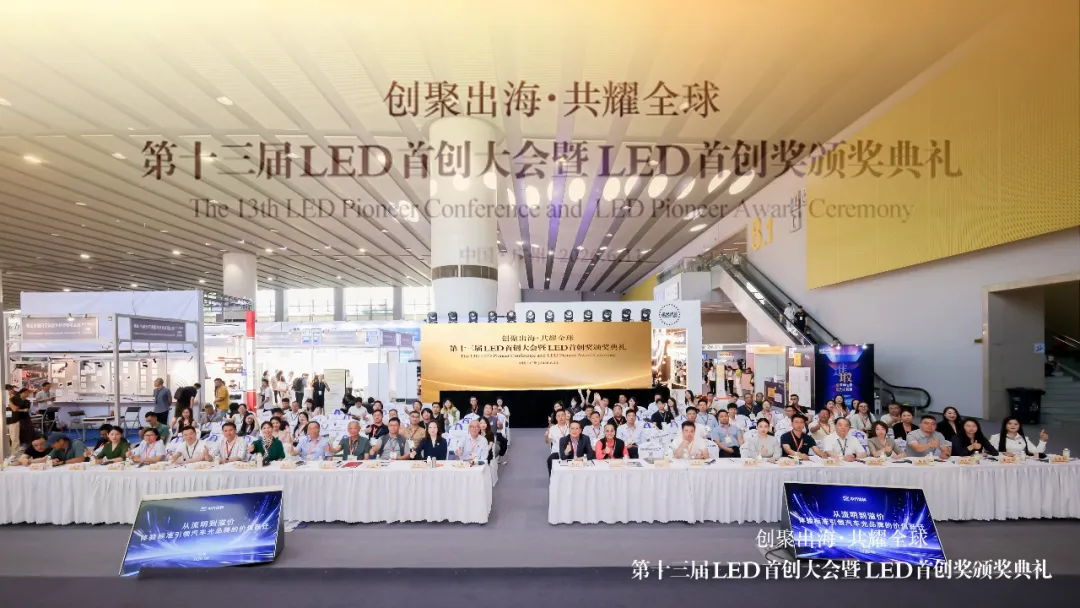
广州,2026年6月11日——在第十三届LED首创大会现场,全球照明采购联合会(GLPF)与北美照明工程学会(IES)…
2026.06.18
-
活动报道
广州,2026年6月11日 — 六月的羊城,光潮涌动。以“创聚出海·共耀全球”为主题的第十三届LED首创大会暨LED…
2026.06.18

-
行业动态
在逆全球化浪潮与地缘政治交织的当下,中美照明行业的技术互通、市场协同正面临挑战——如何打破壁垒、激活产…
2025.09.09
-
行业动态
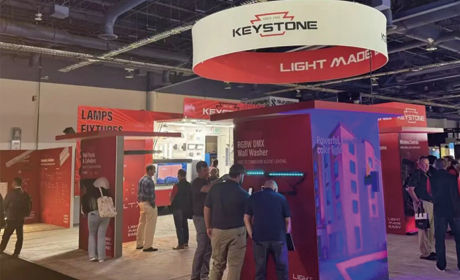
拉斯维加斯,2025年5月7日—— 正在美国拉斯维加斯会展中心举办的2025年美国国际照明展(LightFair)上,全球…
2025.05.08
-
GLPF动态
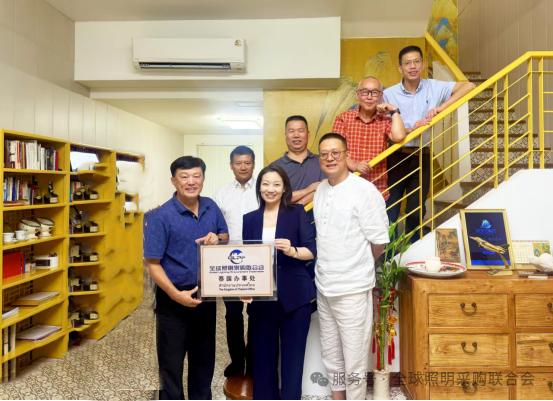
为响应东南亚照明市场蓬勃发展的机遇,解决中企出海痛点,助力全球照明产业链高效协同,2025年6月24日,全球…
2025.06.25